Five times cooling efficiency improvement in Varberg
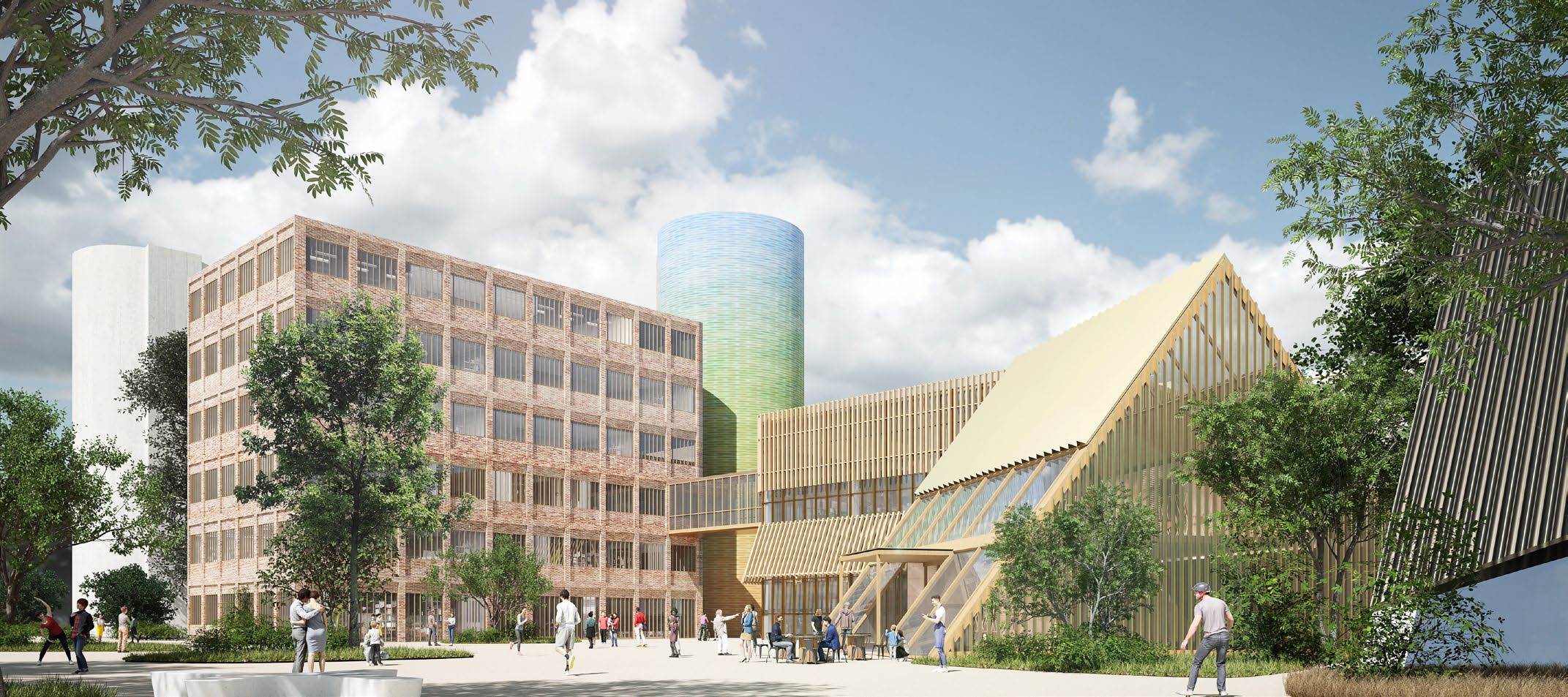
Varberg Energi is building a new district cooling system utilising the sea as a natural cooling resource, plus surplus heat from a nearby factory. The result is cooling production up to five times more efficient than the systems owned and used by customers. FVB is main project leader and responsible for process design.
Varberg Energi is investing in district cooling, a totally new product for the company. Production will be a mix of geocooling, absorption cooling and compressor cooling, giving peak production of 15 mW in total. An accumulator will also be built.
“This was the best combination in terms of economy and the environment. Total COP for our production plant is 15 mW, compared to customer plants achieving only 3–4 mW. That means we save huge amounts of electricity currently used by inefficient cooling machinery,” says Michael Slättberg, Development Engineer at Varberg Energi.
Having a range of production options allows Varberg Energi to produce cooling at highly competitive prices.
“For example: in the event of negative electricity prices, we can make use of the compression cooling plant to a greater extent. It will be a system we can optimise in various ways and with a high level of redundancy, as we have a range of production options,” explains Slättberg.
During the warmer months, Varberg Energi will mainly use surplus heat from Södra Cell Värö to produce absorption cooling, but the sea will provide the main source of cooling all year round. Varberg harbour is so deep that Varberg Energi can avoid having to lay long pipelines to reach sufficient depth, although the permit application process has taken time.
“It is always a sensitive issue to extract and discharge water from the sea, which is why the decision on a permit took so long,” says Aksel Holmberg at FVB. He is a Process Engineer responsible for process design and function description of the production plant.
“The entire harbour also has to be altered to make room for the new Västerport residential development, which means a lot of coordination with all the other projects underway in the area, and how the detailed planning will look,” he adds.
The objective is for the first customer, the city’s hospital, to be connected in 2027. Initially via a temporary cooling machine until the big central cooling plant in the harbour is built, which is expected to be completed at the earliest by 2029.
The hospital will also be the biggest customer, while others will include offices, the university campus, hotels, retirement homes, etc. They will be connected along a district cooling grid in the shape of a horseshoe, with a southern arm running to the hospital and a northern arm to the Holmagärde industrial zone.
Interest in being connected to district cooling is considerable in Varberg, and for good reason.
“District cooling is a highly flexible solution that means customers avoid the hassle of maintenance. Having your own cooling machinery places a heavy environmental burden on the owner. The machinery often contains hazardous coolants that require leak detection. Most businesses do not have these resources in-house and have to outsource. District cooling customers avoid all that,” say Aksel Holmberg. Michael Slättberg adds:
“We also find that our customers are attracted by the sheer convenience. Running cooling machinery is expensive and requires a lot of maintenance. District cooling eliminates ten tonnes of coolant from the centre of Varberg. Then there’s the reduction in noise levels from fans attached to coolant chillers and outdoor cooling units.”
In other words, there are a lot of opportunities for district cooling in Varberg, but building the customer base and technical systems for district cooling in a small organisation is complicated. Varberg Energi therefore decided to bring in external know-how at an early stage. Consequently, FVB has been involved right from the start – from the feasibility study to Bernt Andersson from FVB now heading the project as Chief Project Manager.
“FVB has been key to our project. They have been able to provide everything from project management and design to procurement and commissioning,” concludes Michael Slättberg.
Further information:
Aksel Holmberg, +46 (0)21-81 80 45.
Bernt Andersson, +46 (0)21-81 80 60.