Dialogue key to district heating renewal
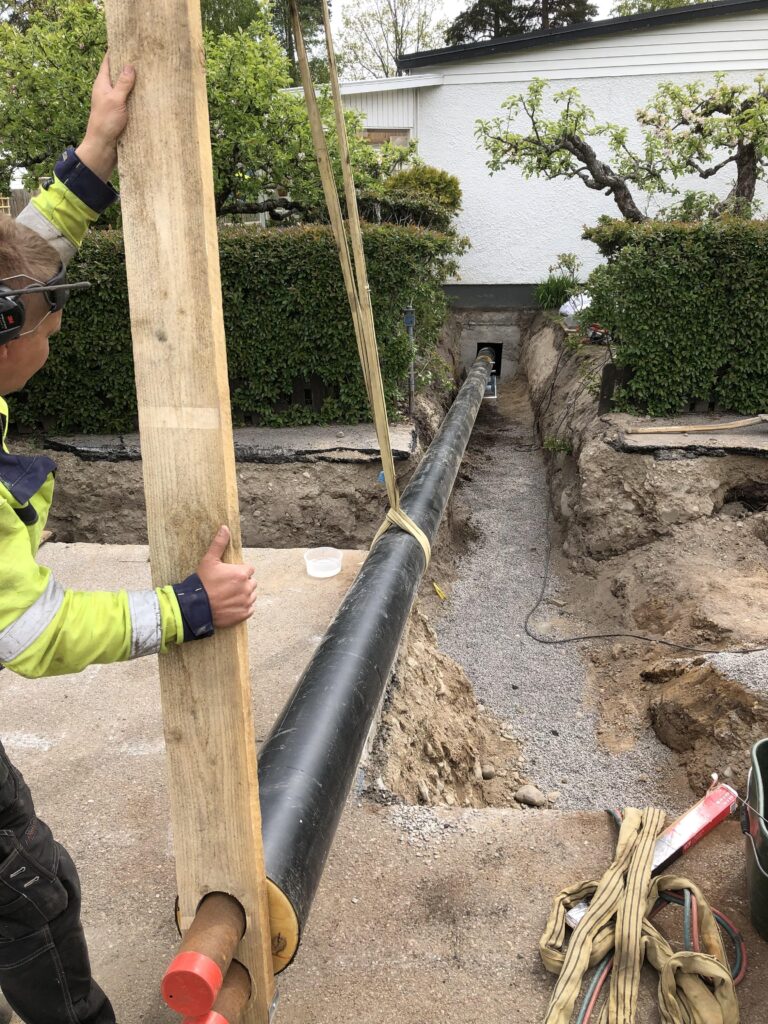
The entire secondary district heating grid under the neighbourhood of Brunnsgärdet in Örebro is being replaced. Pipes leading to no less than 384 households are involved. This extensive project has been under way since 2018, and will be completed in November this year. FVB is responsible for the project design and management.
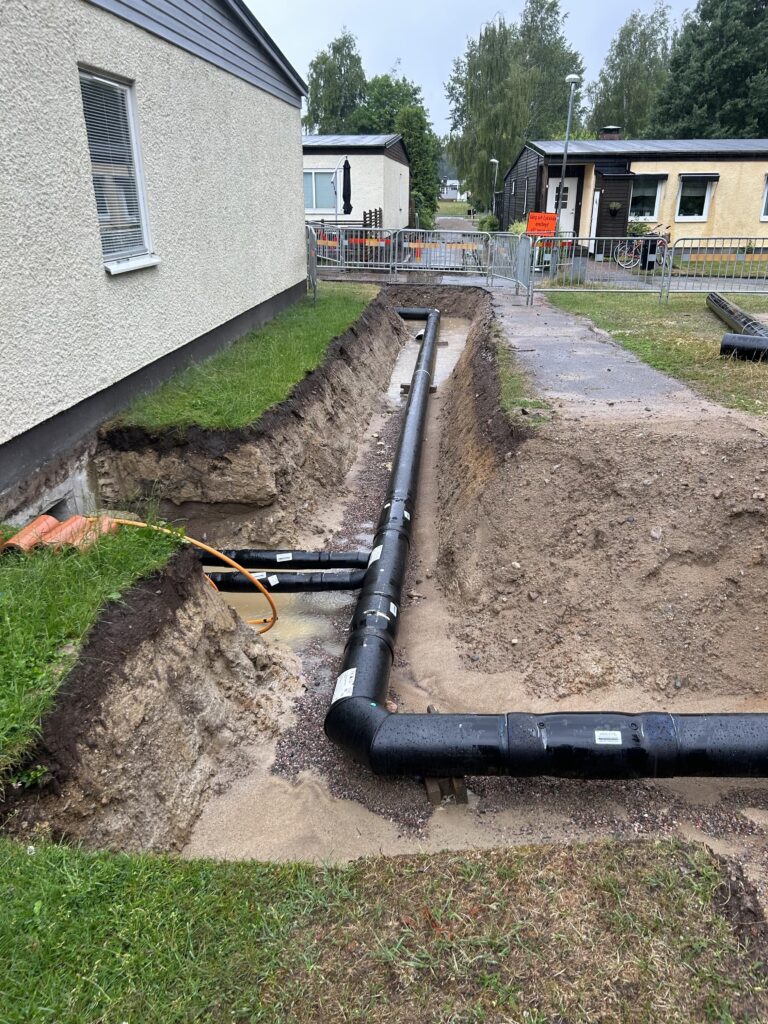
The neighbourhood of Brunnsgärdet consists of terraced houses along seven lanes with their own courtyards. The houses were built between 1967–68 and were connected to the district heating system at the time. Each courtyard contains a centrally located substation where district heating from E.ON terminates. From each substation, a secondary grid branches out to each household, and this is the grid that is now being replaced because of age and problems with leaks.
The secondary grid lies in a crawl space leading to the houses and the old copper pipes are now being replaced with new ones in exactly the same position – work that has not been easy.
“We had to make some careful choices in terms of methods and material to carry out this job,” says Jan Baastad, Project Manager at FVB.
Welding outdoors
The choice of materials for the pipes was between PEX, copper and steel, with prefabricated steel culverts being the final choice. These culverts allow higher temperatures and have the advantage of integrated alarm sensors in the insulation. The alarm sensors detect moisture and trigger an alarm if any leaks occur in the future.
“Joining the steel culverts together was performed with safety in mind. We avoided welding in the crawl space, welding and pressure-testing each joint outdoors instead. We then successively built up the pipe system in the crawl space,” explains Baastad.
“We’ve worked hard on developing the method to be able to replace the secondary grid in a crawl space and have now proved that it can be done efficiently,” he adds.
Another important lesson learned was how the work can be done smoothly within someone’s home.
“That’s something else we worked with a lot. It involved continuously giving the residents updated information. Our contractor, Viby Maskintjänst, was also good at working in environments where people live and making sure their everyday lives continue to run smoothly while the work was being done.”
Quality information
Malin Uhlán is the chairperson of the Brunnsgärdet Samfällighetsförening (ownership association) and agrees with Baastad. She points to the regular meetings and continuous feed of information as key factors of the project’s success.
“Representatives from both the contractors and the association were incredibly engaged in answering questions. The fact that they took the time and found the right solutions to ensure there was as little impact as possible for the residents meant that the work went extremely well,” she says.
For the residents, the work was of course substantial, as it took place between May and September in the various lanes. During that period, they had no external heating or hot water piped in.
“We arranged the work to be done during this period to avoid cold houses for the residents, but they were given access to support elements when needed. Regarding hot water, every owner was given a small hot water heater capable of heating 30 litres, which meant they became very good at planning their hot water usage,” says Uhlán.
For more details, contact:
Jan Baastad, 019-30 60 66.


