Major improvements for water when two sewage treatment plans become one

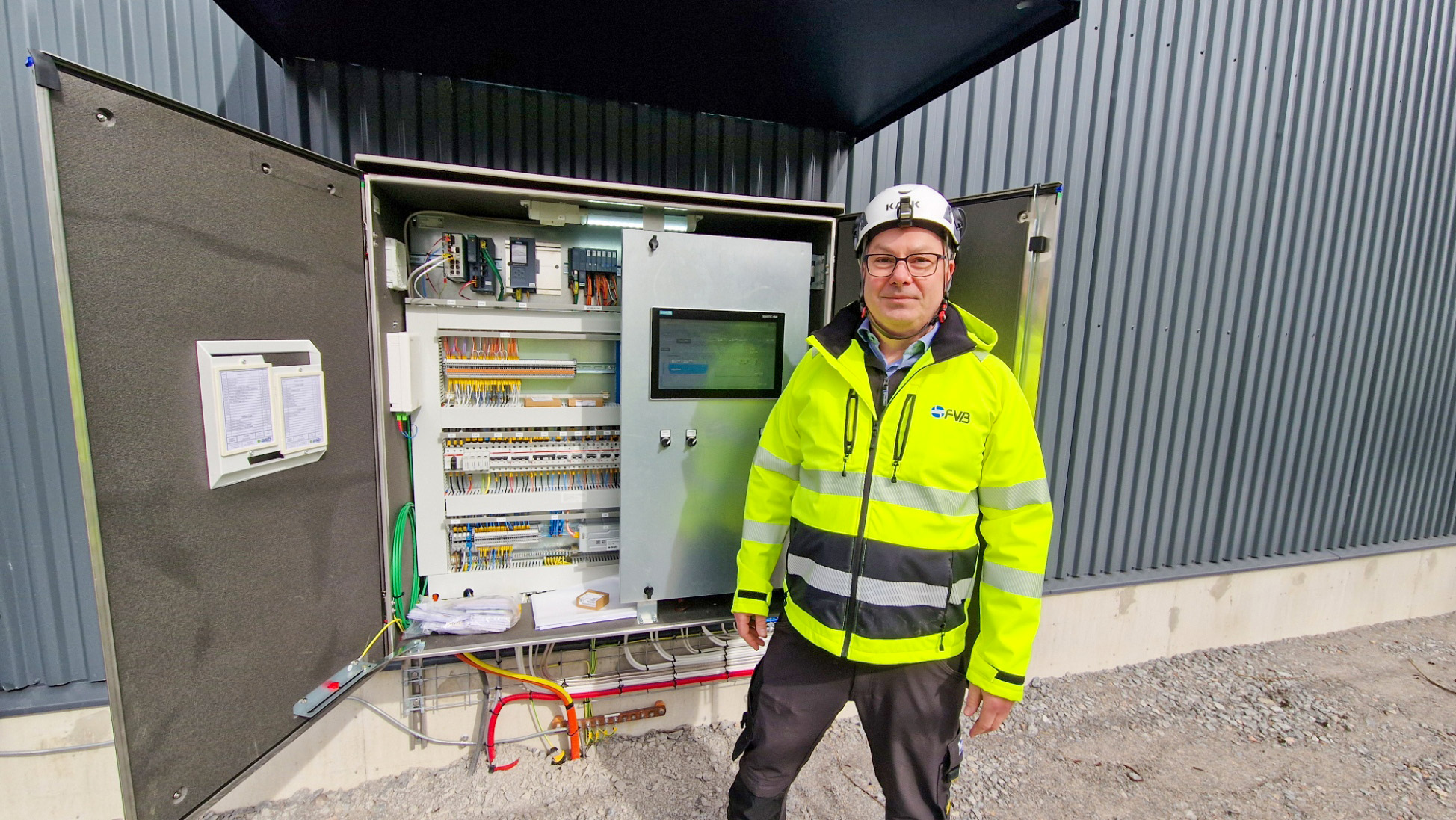
Two outdated sewage treatment plants in Strängnäs municipality are to be merged into one modern plant to meet new capacity andenvironmental requirements. FVB plays a leading role in the project, with responsibility for electricity and automation in one of the region’s most technically demanding water projects.
Strängnäs municipality has had two separate sewage treatment plants for many years – one in Gorsingeholm on the outskirts of town and one in Mariefred. But both are based on outdated technology and the Mariefred plant has reached its capacity limit. The municipality is growing and environmental requirements are becoming stricter.
The municipality has therefore taken a strategic decision to undertake extensive renovation and modernising of the Strängnäs plant and to close the Mariefred plant.
The project, which started in 2024 and will run to the end of 2027, will involve the building of a new biological purification plant for more efficient nitrogen reduction and the renovation of basins and existing aftertreatment with a new control and monitoring system. A 16-kilometre transfer pipe has already been built in parallel to the renovation works, running from Mariefred to Gorsingeholm, partially under Lake Mälaren.
“A major challenge with the project is that all the new construction at Gorsingeholm has to be done on a site where the existing water treatment plant continues to operate normally,” says Peter Eklund.
He is the Project Manager for control and automation at FVB and responsible for the SCADA (Supervisory Control and Data Acquisition) system used for the project. FVB’s responsibilities include electrical construction and control programming.
“The extensive renovation work is intended to make the treatment plant more process intensive. Since the project started, additional elements have been included, such as the switchgear being replaced and backup power being installed. Solar panels have also been installed on the new buildings, which obviously impacts the elements FVB is responsible for,” adds Eklund.
When the modernised treatment plant is ready, it will resemble an industrial process operating 24/7. To ensure no disruption to operations and optimisation, the control and automation technology is key.
“FVB is responsible for everything related to automation, from electrical constructions to the overall monitoring system,” explains Eklund.
The work is being done in three phases, starting with electrical constructions. A central element is designing the cabinets to house all the electrical and electronic controls needed to control a specific machine or process section, including communication between the various units. When the cabinets are built and in place, they have to be programmed, which is done by FVB’s control system developers. They write the programs to control processes in the treatment plant, for example when a pump is to start and how much a valve should open.
The final phase is commissioning, which will include monitoring via the SCADA system iFix, which means the entire plant can be monitored in real time from a control room.
“We are developing the control room’s process diagrams, so that the operators can control the plant. Other important elements involve the operators being able to analyse their process data and get valuable information such as environment and energy data for analysis and follow-up, not to mention having an effective alarm management system to deal with process disruptions.”
The fact that this is a technically demanding project makes it even more interesting according to Eklund.
“Understanding the problems and challenges faced by all the parties involved in building such a complex plant is educational. There are no ready-made solutions or off-the-shelf products available, we simply have to continuously adapt to the site and the specific conditions, which includes the properties of the wastewater. It makes it both challenging and enjoyable,” he says.

